Same site, three years later: a full modernization (with an AI pair programmer)
Svelte 5, Tailwind 4, markdown macros, tests, Storybook, CI — and how an AI agent helped rebuild it all in one session.
Why touch a working website?
The original version of this site served me well since early 2023. But three years is a geological era in frontend land: Svelte gained runes, Tailwind moved its config into CSS, daisyUI grew a proper timeline component, and my dependency tree had started to fossilize.
So I did what any reasonable engineer does in 2026: I described what I wanted to an AI coding agent, reviewed everything it produced, and shipped the whole modernization in a day. This article is both the changelog and a live demo of the new toys.
Drag the slider — same homepage, three years apart:
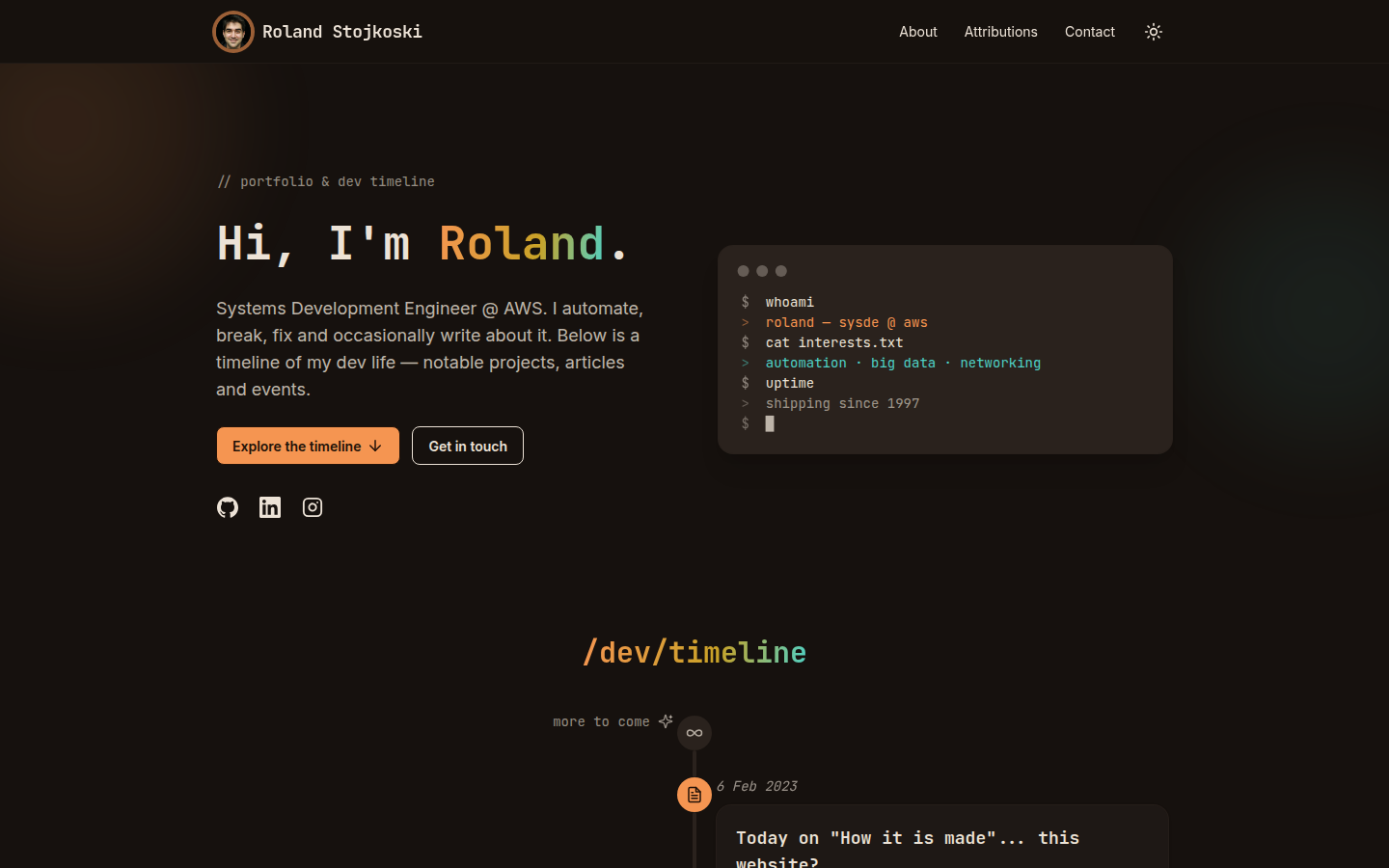
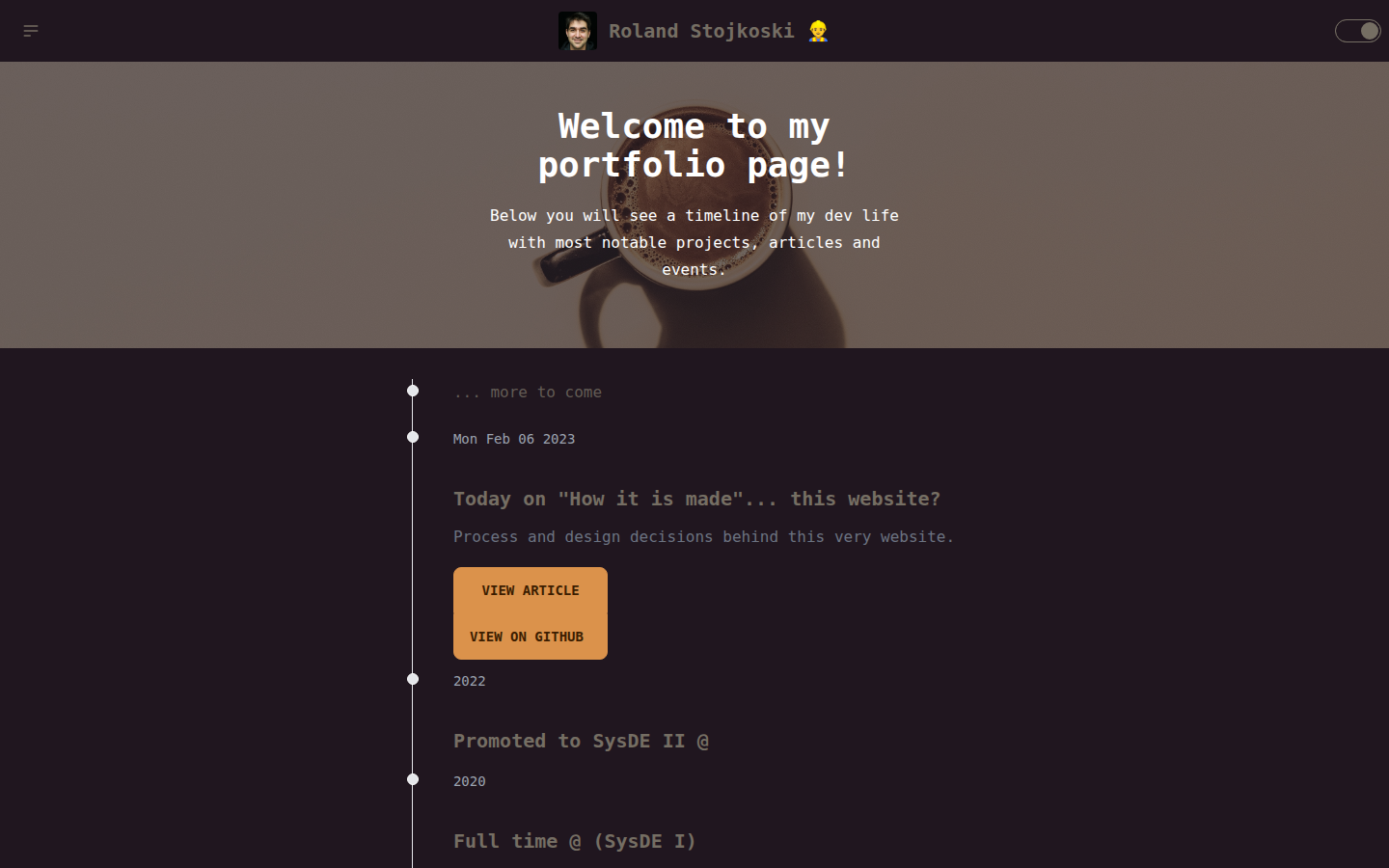
What changed under the hood
| Before (2023) | After (2026) |
|---|---|
| Svelte 3 + SvelteKit 1 | Svelte 5 (runes) + SvelteKit 2 |
| Tailwind 3 + daisyUI 2 | Tailwind 4 (CSS-first) + daisyUI 5 |
| flowbite-svelte components | a handful of small custom components |
| Font Awesome CDN kit | inline SVG icons, zero requests |
| Google-hosted fonts | self-hosted variable fonts |
manual gh-pages deploys | GitHub Actions build + deploy |
| no tests 😬 | 65 unit tests + Playwright e2e + Storybook |
The markdown-first philosophy stayed. Articles are still just .md files
with a bit of frontmatter — the timeline, article pages and the new RSS feed
are all derived from them at build time.
Dark mode that actually sticks
The old theme toggle was flaky: the choice lived only in a checkbox and the
page could flash the wrong theme on load. The new setup resolves the theme
before first paint (stored preference, falling back to prefers-color-scheme), persists it in localStorage, and broadcasts
changes so embedded widgets can follow along.
To resolve the theme before the initial Svelte paint and prevent visual flashing, we inject a blocker script directly in src/app.html:
// Prevent Flash of Unstyled Content (FOUC)
const theme =
	localStorage.getItem('theme') ||
	(window.matchMedia('(prefers-color-scheme: dark)').matches ? 'espresso' : 'latte');
document.documentElement.setAttribute('data-theme', theme);
There is a Playwright test that toggles, reloads and checks it stuck — flakiness is now a regression, not a mood.
Markdown macros
The best part of the rebuild: articles now have superpowers without any imports. mdsvex injects a set of components into every markdown file, so embedding things is a one-liner.
A YouTube embed that only loads the player (cookie-free) when you click it:
An in-browser 3D viewer for STL files — three.js, lazy-loaded on the client, running fine within GitHub Pages’ static confines. No server, no WebAssembly needed, just WebGL:
Plus <Figure> for captioned images and the <Compare> slider you already
used above.
Tests, stories, robots
- Unit tests (Vitest + Testing Library) cover the article parsing, theme logic, timeline merging and every component — including one that would have caught the classic “icon name doesn’t exist” bug I hit while building it.
- Playwright smoke-tests the built site: navigation, both themes, RSS.
Here is the Playwright E2E test verifying that the theme toggles and survives page reloads:
test('theme toggle switches theme and survives reload', async ({ page }) => {
	await page.goto('/');
	const toggle = page.getByRole('button', { name: 'Toggle theme' });
	const initialTheme = await page.evaluate(() =>
		document.documentElement.getAttribute('data-theme')
	);

	await toggle.click();
	const newTheme = await page.evaluate(() => document.documentElement.getAttribute('data-theme'));
	expect(newTheme).not.toBe(initialTheme);

	await page.reload();
	const reloadedTheme = await page.evaluate(() =>
		document.documentElement.getAttribute('data-theme')
	);
	expect(reloadedTheme).toBe(newTheme);
});- Storybook hosts every component with a theme switcher in the toolbar, so design work doesn’t require clicking through the whole site.
- GitHub Actions runs all of it on every PR and deploys
mainstraight to Pages.
And because the site is now maintained with AI agents rather than just by me: the repo carries an AGENTS.md (tool-agnostic instructions), a CLAUDE.md pointing at it, and .claude/ skills that teach an agent how to
write articles like this one — down to the commit style (semantic, lowercase,
imperative) and a strict “comment only what the code can’t say” policy.
Comments (soon)
Article pages are wired for giscus — comments backed by GitHub Discussions, sign-in with GitHub, no tracking, free. It lights up the moment Discussions are enabled on the repo. Until then: the contact page works, and so does the shiny new RSS feed.
Happy coding, see you in another three years 😀